

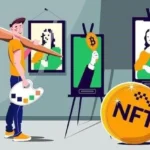


Non-Fungible Tokens (NFTs) have revolutionized digital ownership, but high price tags often limit participation. Fractional NFT marketplaces are emerging as a solution, allowing users to collectively own portions of high-value NFTs. This article explores the concept, benefits, platforms, and future of this innovative space.
What are Fractional NFTs?
Traditionally, buying an NFT meant acquiring the entire token. Fractionalization splits an NFT into multiple, smaller tokens – fractions – representing ownership shares. These fractions are then traded on specialized marketplaces. Think of it like owning stock in a company; you don’t own the whole company, but a percentage of it. This dramatically lowers the barrier to entry for owning pieces of coveted digital assets.
Benefits of Fractionalization
- Increased Accessibility: Lower investment costs open NFT ownership to a wider audience.
- Enhanced Liquidity: Fractions are easier to buy and sell than whole NFTs, improving market liquidity.
- Portfolio Diversification: Investors can diversify their NFT holdings with smaller investments.
- Community Building: Fractional ownership fosters communities around shared assets.
- Reduced Risk: Spreading investment across multiple fractions mitigates risk.
Key Platforms & Marketplaces
Several platforms are leading the charge in fractional NFT marketplaces:
Fractional.app
One of the pioneers, Fractional allows users to create and trade fractions of NFTs. It focuses on simplifying the process of fractionalizing and managing ownership.
Sudoswap
Sudoswap utilizes Automated Market Maker (AMM) technology, enabling peer-to-peer trading of NFT fractions with dynamic pricing. It’s known for its liquidity pools.
Pine
Pine offers a curated experience for fractionalizing and trading blue-chip NFTs. It emphasizes security and user experience.
NFTX
NFTX allows users to create ERC-20 tokens backed by NFT collections. These tokens represent fractional ownership and can be traded on decentralized exchanges.
The Process: How Does it Work?
- NFT Selection: An NFT owner decides to fractionalize their asset.
- Fraction Creation: The NFT is locked in a smart contract, and fractions are minted.
- Fraction Listing: The fractions are listed on a fractional NFT marketplace.
- Trading: Users buy and sell fractions, representing ownership shares.
- Governance (Optional): Some platforms offer governance rights to fraction holders.
Challenges & Considerations
While promising, fractional NFTs face challenges:
- Smart Contract Security: Smart contract vulnerabilities pose a risk.
- Regulatory Uncertainty: The legal status of fractional NFTs is still evolving.
- Fractional Ownership Complexity: Managing shared ownership can be complex.
- Liquidity Issues: Some fractions may have limited trading volume.
The Future of Fractional NFTs
Fractional NFTs are poised for significant growth. Expect to see:
- Increased Adoption: More platforms and NFTs will embrace fractionalization.
- Improved Infrastructure: Better tools for managing fractional ownership.
- Integration with DeFi: Combining fractional NFTs with decentralized finance protocols.
- New Use Cases: Fractionalizing real-world assets using NFTs.
Fractional NFT marketplaces are democratizing access to the exciting world of NFTs, making digital ownership more inclusive and accessible than ever before. As the technology matures and regulatory clarity emerges, fractionalization will likely become a standard practice in the NFT ecosystem.
